
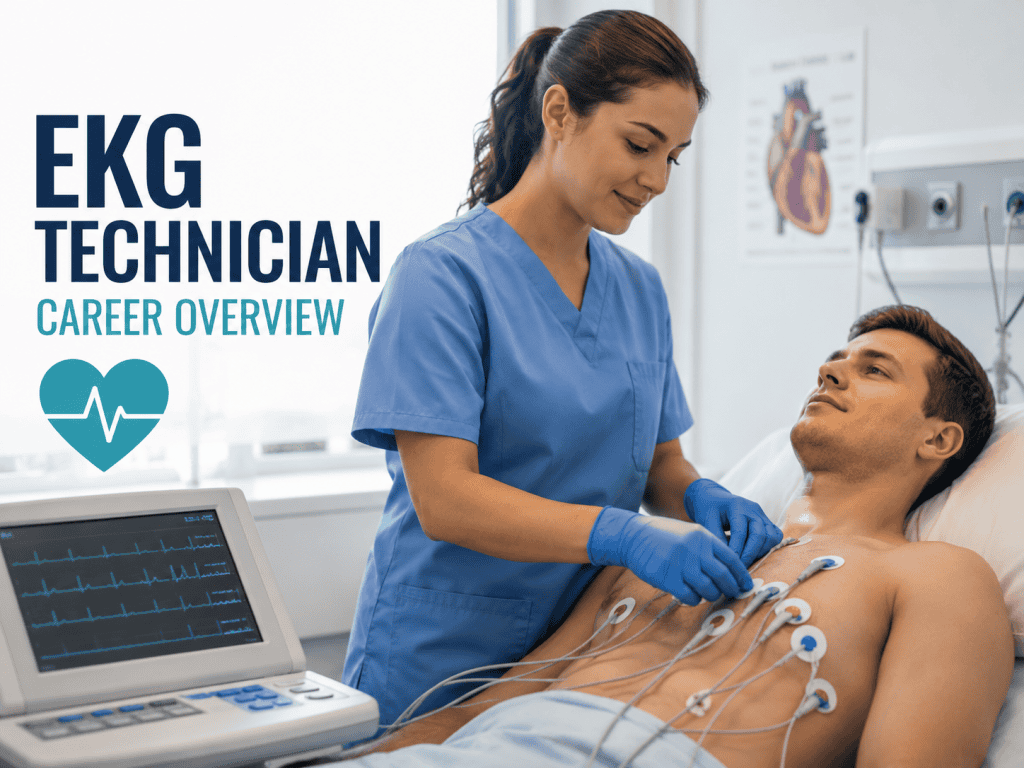
EKG Technician Career Overview: What They Do and How to Get Started
Curious about becoming an EKG technician? You’ve probably encountered one while visiting a doctor’s office. They attach small sticky patches to your chest and attach wires to those patches. Then they connect those wires to a machine to run a test. Your doctor reads the test results, looking for signs of heart attacks, abnormal rhythms, and much more. It sounds basic enough, but the work they do is incredibly important.
Okay, but what does an EKG technician do? And how do you become one? Let’s find out.
What Is an EKG Technician?
An electrocardiogram technician is also known as an EKG technician. This role focuses on tests that measure electrical activity in the heart. The machine detects the heart’s signals and produces a reading for the doctor. That reading may be printed on paper or displayed on a screen.
EKG techs work in hospitals, physicians’ offices, and outpatient clinics. Some also serve patients through home health agencies. As an EKG tech, you’ll usually spend your day moving from one room to the next. You’ll prepare the machine, help the patient get ready, and complete the test. Then the results are documented. The job can be fast-paced, but it helps patients in a direct and meaningful way.
What Do EKG Technicians Actually Do?
The job is not just about pressing a button on a machine. That is only one small step. Here is what your day-to-day work may include:
- Prep patients for their test. Greeting patients, explaining the test to them, answering questions, placing electrodes (small sensors) on patients’ skin, and calming their nerves
- Operate the EKG machine. Activating the machine and recording heart activity (about five minutes)
- Learn different types of EKG tests. There are multiple types of EKG exams. A resting EKG requires patients to sit still. An exercise EKG requires patients to walk on a treadmill. Patients wear a Holter monitor for a day or two while they go about their normal routines at home.
- Identify any critical readings. If the EKG machine alarms or if something doesn’t look right, they notify the nurse or doctor immediately.
- Keep records: Log results in the patient’s file and maintain the equipment.
That last point matters more than people expect. Terri Glazewski, a program adviser at Edmonds College, made a strong point about this. She said online-only courses can teach you to run a test. But they won’t teach you to really read what’s going on. “The computer is not always right,” she explained. A properly trained tech can walk up to a busy nurse and say, “I need you to look at this right now” instead of just leaving the results on a desk.
Skills Every EKG Tech Needs
EKG tech skills go beyond just the technical side. Here’s what it really takes:
- Strong communication so patients feel at ease and trust you
- Attention to detail, because small errors affect test results
- Critical thinking to catch when something looks wrong
- Emotional strength for tough moments with sick and scared patients
- Flexibility to adapt when a patient is uncooperative or anxious
How to Become an EKG Technician
EKG technician programs typically range from three to nine months in length. Community colleges and vocational schools typically offer programs that result in an EKG certificate. Courses you will take include anatomy, medical terminology, basic life support, and cardiac rhythm interpretation. Clinical hours will be completed at an actual medical facility in most programs.
You can become certified once you have completed EKG technician training. The National Healthcareer Association provides the Certified EKG Technician certification. Certification shows employers you have the required skills. It can also raise your starting pay. At a minimum, you need a high school diploma. As entry-level healthcare jobs go, this one is very accessible.
Salary and Job Outlook
The average annual salary is $67,260, according to the U.S. Bureau of Labor Statistics. Salary ranges will vary drastically from state to state. The states that typically have the highest salaries are Alaska, Hawaii, and Massachusetts. Many positions offer overtime as well.
Employment of cardiovascular technologists and technicians is expected to grow 3 percent through 2034. More people may develop heart disease as the population ages. This will raise the need for cardiovascular tests and procedures.
Is This the Right Career for You?
If you are looking for a quick way to enter the healthcare field and do something that matters, you can consider becoming an EKG tech. The training requirements are minimal, and the pay is good. What’s more, you can save lives with every test you perform.


